Paint sheens explained: flat, eggshell, satin, semi-gloss and gloss
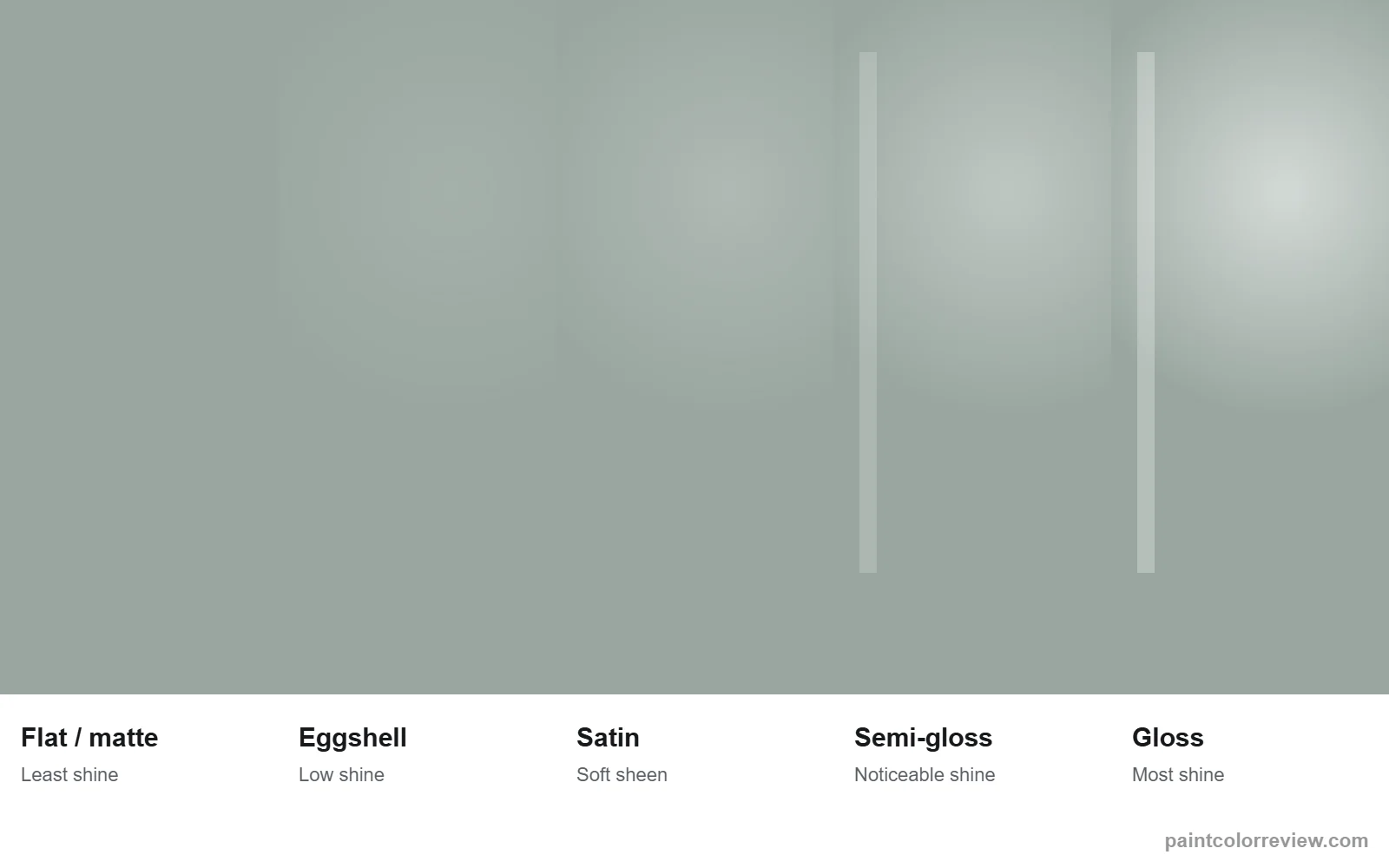
Paint sheen is how shiny the dried paint is, from flat to gloss. For most walls, eggshell is the best all-round choice: low shine that hides flaws but wipes clean. Use satin in kitchens and bathrooms, semi-gloss on trim and doors, and flat on ceilings.
What is paint sheen?
Sheen, or finish, is how much light a dried paint surface reflects as shine. It runs from flat (almost no shine) to gloss (mirror-like shine). Sheen changes three things: how the color looks, how easy the wall is to clean, and how much it shows flaws in the surface underneath.
The five main paint sheens
| Sheen | Look | Cleanability | Best for |
|---|---|---|---|
| Flat / matte | No shine, hides flaws | Lowest | Ceilings, low-traffic walls, bedrooms |
| Eggshell | Very soft, low luster | Good | Most living spaces, hallways, family rooms |
| Satin | Soft, pearly sheen | Very good | Kitchens, bathrooms, kids' rooms, some trim |
| Semi-gloss | Noticeable shine | Excellent | Trim, doors, cabinets, bathrooms |
| Gloss | High shine | Best | Front doors, furniture, accent trim |
Brands name their sheens differently, and some add in-between levels, so compare the actual finish samples in the store.
Eggshell paint: the most popular wall finish
Eggshell has a very low luster, roughly like the surface of an egg. It sits just above flat: it hides minor wall flaws almost as well as matte, but is noticeably easier to wipe clean. That balance is why eggshell is the default choice for living rooms, dining rooms, bedrooms and hallways.
Eggshell vs flat. Flat hides imperfections best and looks the softest, but marks more easily. Choose flat for ceilings and walls that rarely get touched; choose eggshell anywhere people brush past or kids reach.
Eggshell vs satin. Satin has a little more shine and stands up better to moisture and scrubbing, so it is usually the better choice for kitchens, bathrooms and busy family spaces. The extra shine also shows wall flaws and roller marks more.
How sheen changes the way a color looks
Shinier finishes reflect more light, so the same color can look slightly lighter and more saturated in satin or semi-gloss than in flat. Flat finishes absorb more light and look softer and a touch deeper. When you test a color, test it in the sheen you plan to use. Whatever the sheen, a color's LRV and undertone still decide most of how it reads.
Which sheen to use where
Walls: eggshell for most rooms; satin for kitchens, bathrooms and high-traffic areas; matte for bedrooms and formal rooms where you want the softest look.
Ceilings: flat, to hide imperfections and avoid glare.
Trim and doors: semi-gloss is the classic choice because it is durable and gives a crisp line between trim and wall. Using one step more shine on trim than on walls is a simple rule that always looks finished, for example eggshell walls with semi-gloss trim in a white like Chantilly Lace.
Kitchen cabinets: satin or semi-gloss, for durability and easy cleaning.
Same color on walls and trim: to paint walls and trim in one color, as many people do with White Dove, use different sheens so the trim still reads as trim.
Paint sheen chart: what the gloss levels mean
Brand names for sheens vary, but the industry has a measured scale. The Master Painters Institute (MPI) defines seven gloss levels by how much light a dried film reflects, measured in gloss units with a gloss meter. Flatter levels are also checked at a low 85° angle, which picks up the soft "sheen" you see when looking along a wall.
| MPI level | Common name | Gloss at 60° | Sheen at 85° |
|---|---|---|---|
| 1 | Flat / matte | Up to 5 | Up to 10 |
| 2 | Velvet (high-side-sheen flat) | Up to 10 | 10–35 |
| 3 | Eggshell | 10–25 | 10–35 |
| 4 | Satin | 20–35 | 35 or more |
| 5 | Semi-gloss | 35–70 | — |
| 6 | Gloss | 70–85 | — |
| 7 | High gloss | Over 85 | — |
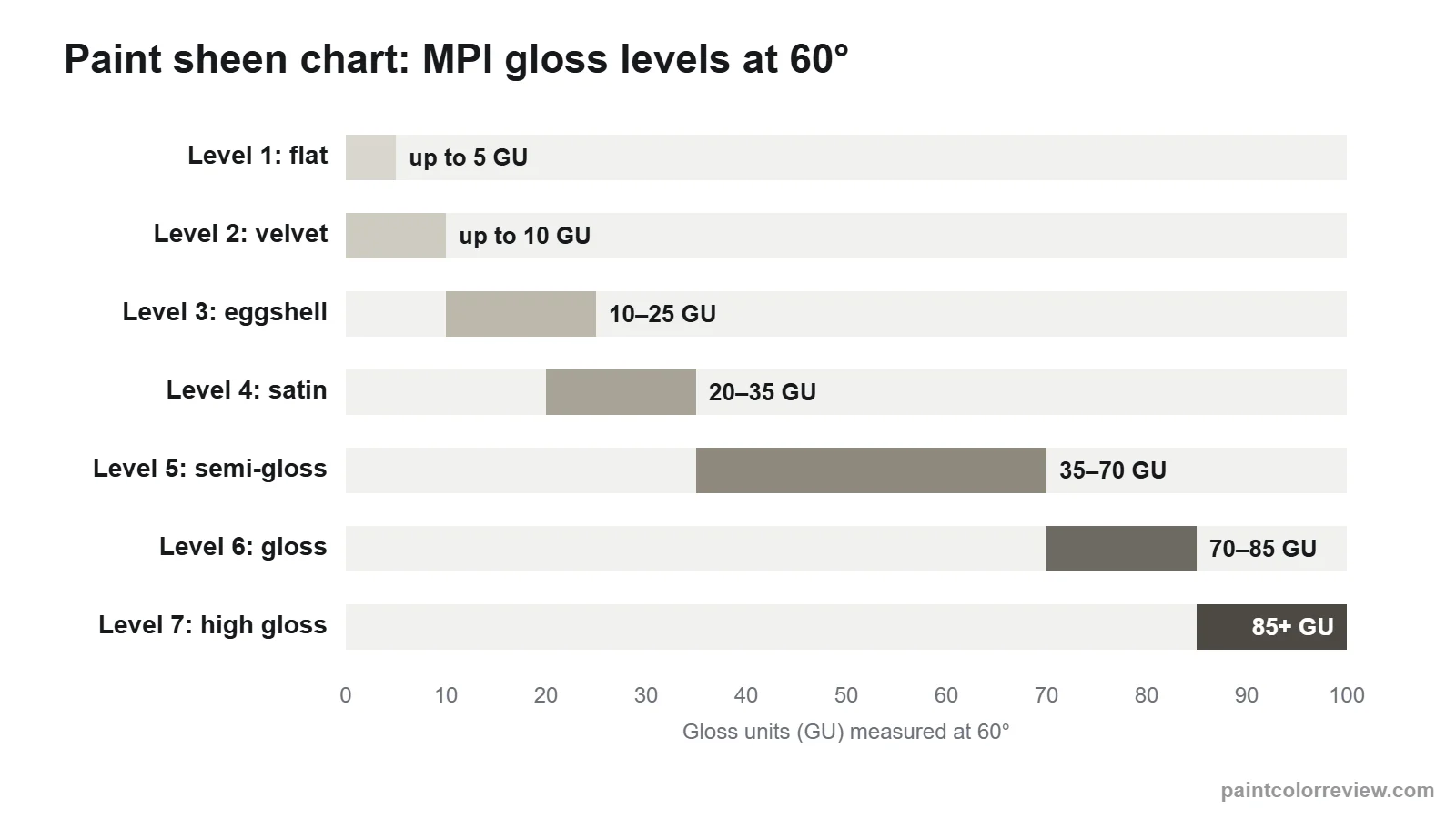
Eggshell and satin overlap on this scale (20–25 gloss units), which is why one brand's satin can look like another brand's eggshell. Always compare a dried sample of the actual product.
Sherwin-Williams and Benjamin Moore sheen names
The two big brands use different names for similar finishes, and not every product line comes in every sheen. This table lines them up as each brand lists them, from flattest to glossiest.
| General finish | Sherwin-Williams | Benjamin Moore |
|---|---|---|
| Flat | Flat | Flat |
| Matte | Matte, Velvet | Matte / Ulti-Matte |
| Eggshell | Eg-Shel / Satin | Eggshell |
| Low luster | Low-Lustre | Low Lustre |
| Satin | Pearl | Pearl / Satin |
| Semi-gloss | Semi-Gloss, Medium Lustre | Semi-Gloss / Soft Gloss |
| Gloss | Gloss, High Gloss | Gloss / High-Gloss |
Note the trap: Sherwin-Williams groups "Eg-Shel" with "Satin", while Benjamin Moore uses "Satin" for its pearl-level finish, one step shinier. When you switch brands, match the finish by looking at it, not by its name.
Best paint finish for each room
Bathrooms
Satin or pearl is the usual choice because it resists moisture and wipes clean. Some brands also make paints for humid rooms in flatter finishes; Benjamin Moore lists Aura Bath & Spa in matte for high-humidity rooms. Whatever the sheen, good ventilation matters more than the finish.
Kitchen walls
Eggshell in dining areas and satin or pearl near the stove and sink, where splashes and grease need regular wiping.
Kitchen cabinets
Satin or semi-gloss for durability, ideally in a paint made for cabinets and trim, such as Benjamin Moore Advance or Sherwin-Williams Emerald Urethane Trim Enamel. Higher sheens show brush marks and dents more, so a careful finish matters.
Bedrooms and living rooms
Matte or eggshell. Matte gives the softest, most even color; eggshell adds a little washability for living spaces.
Hallways, mudrooms and kids' rooms
Eggshell or satin, or a scuff-resistant line such as Benjamin Moore Scuff-X, because these walls get bumped and wiped the most.
Exteriors
Benjamin Moore's sheen guide lists low lustre and pearl/satin for siding and trim and glossier finishes for doors and architectural details; Sherwin-Williams lists matte among its exterior siding options. Flatter finishes hide surface flaws on siding; glossier ones shed dirt and suit doors and shutters.
Sheen and touch-ups
Flatter finishes touch up almost invisibly, because there is little shine to reveal a patch. The shinier the paint, the more a touch-up or a lap mark shows as a different gloss, so walls in semi-gloss are usually repainted corner to corner rather than spot-fixed.
FAQs
What is eggshell paint?
Eggshell is a low-luster paint finish, slightly shinier than flat, that hides minor flaws while being easier to clean. It is the most common choice for walls in living spaces.
Is eggshell or satin better for walls?
Eggshell for most living spaces; satin for kitchens, bathrooms and high-traffic areas where durability and moisture resistance matter more.
What sheen should I use for trim?
Semi-gloss is the classic trim finish: durable and easy to clean, with a crisp contrast against eggshell or matte walls.
What sheen is best for ceilings?
Flat, because it hides imperfections and avoids glare.
Does sheen change paint color?
Slightly. Shinier sheens can make a color look a little lighter and more saturated; flat finishes look softer and slightly deeper.
What is the best paint finish for a bathroom?
Satin or pearl for most bathrooms, because it resists moisture and wipes clean. Some brands make humidity-resistant paints in matte, such as Benjamin Moore Aura Bath & Spa.
What is the best paint finish for kitchen cabinets?
Satin or semi-gloss, in a paint designed for cabinets and trim, for a durable, washable surface.
Is satin shinier than eggshell?
Usually, yes. On the MPI scale eggshell is level 3 and satin is level 4, but the ranges overlap and brands name them differently, so compare dried samples.
What is the difference between Sherwin-Williams Eg-Shel and Benjamin Moore Eggshell?
Both are low-sheen wall finishes at a similar level. Sherwin-Williams groups Eg-Shel with satin in its sheen guide, so compare samples if you are matching an existing wall.